UX CASE STUDY 2026


UX Design
UI Design
End-to-End
Mobile App
A location-based meetup app that helps friends find the perfect place to meet in the middle
Coordinating plans with friends often requires multiple conversations, searching across platforms, and negotiating locations. Halfway simplifies the planning process by helping users find convenient meetup spots based on everyone’s location and preferences
PROJECT TYPE
End-End Mobile App
DURATION
5 weeks
ROLE
UX/UI Designer
TOOLS
Figma, Figjam, Maze
01
Overview
Project Brief
A mobile app designed to help friends, partners, family, and groups find convenient and meaningful places to meet based on their locations, preferences, and constraints. This app simplifies the often frustrating process of coordinating plans and deciding what to do when meeting up. The app recommends fair personalized meet up spots, activities, and venues
Planning meetups with friends often involves a frustrating back-and-forth process. Existing tools help users find places, but they do not solve the problem of choosing a location collaboratively
Problem

Design a mobile experience that reduces friction when planning social meetups by helping groups quickly discover a convenient meeting location
Solution

Business Goals:
Helping to solve a real-world, common coordination problem
Drive user engagement
Create opportunities for partnerships
User Goals:
Quickly find fair and convenient locations
Easily share, compare, and finalize meetup options within one platform
Goal

Target Audience
Socially active adults who frequently coordinate meetups with friends, family, or partners
Design Process
Project brief and overview
User Research
Competitor Analysis
User Personas
Affinity Mapping
Feature Set
Sitemapping
Wireframing
Low fidelity prototype
High fidelity prototype
Usability Testing
Iterations
Final Prototype
UI Kit
Discover
Define
Develop
Deliver
*A look behind the scenes of my process. From initial research to the final prototype, I structured my workflow around the design process and real user insights.*
02
User Research
User Research
Goal
I wanted to understand:
How people currently plan meetups?
What causes friction during planning?
What tools users rely on?
What features would make meetup planning easier?
Methods
Survey: X participants
Interviews: X users
Competitive analysis
User testing
Finding 1
Planning requires too many tools.
Users commonly switch between:
Maps
Text messages
Social media
Calendar apps
Finding 2
Fairness matters.
Users want meetup locations that feel balanced rather than choosing a location based on one person’s convenience
Finding 3
Users value real connection.
Users want to spend less time planning and more time actually connecting.
Top Pain Points in Meetup Coordination
Deciding on a fair location
77%
Coordinating schedules
68%
Choosing venue type
59%
Getting consensus
54%
Figuring out navigation to location
62%
User Interviews
MA
Maeve, 26
Marketing Professional
“I spend more time deciding where to meet than actually meeting up with people.”
Long commute, endless group chats
AW
Andrew, 28
Computer Science Engineer
“Plans always change last minute because someone complains about the distance.”
Changing plans, transportation limits
MA
Jennifer, 52
Project Manager
“For client meetings, I need to find a neutral spot quickly and not waste time researching and Googling.”
Wasted planning time, professionalism
MA
Sam, 34
Restaurant Worker
“Trying to meet up with friends after work sometimes just stays in the group chat because we can’t decide”
Indecision, time spent deciding & debating
03
Analysis
User Personas

Olivia Chen
AGE
GOALS
PAIN POINTS
BEHAVIORS
STORY
26
Social Media Manager
Philadelphia, PA
Olivia meets up with friends, coworkers, and her partner several times a week. Most plans happen spontaneously through group chats, where conversations quickly become cluttered with screenshots, restaurant links, and “what about this place?” messages.
She enjoys discovering new spots and values the overall experience of going out, but she gets frustrated when simple plans turn into long decision threads.
Too much back-and-forth in group chats
Comparing multiple links and screenshots
Difficulty narrowing down options
Coordinating schedules and availability
Feeling overwhelmed by too many choices
Frequently Uses - Google maps, text messaging, Google search, Instagram/TikTok recommendation, calendar apps
Find places everyone feels excited about
Make planning feel easier
Discover new places without endless searching
Keep meetup planning collaborative and social
Avoid repeating the same places every weekend
Bachelor’s in Marketing and Business
LOCATION
EDUCATION
JOB TITLE
“It feels like we spend more time deciding where to go than actually hanging out.”
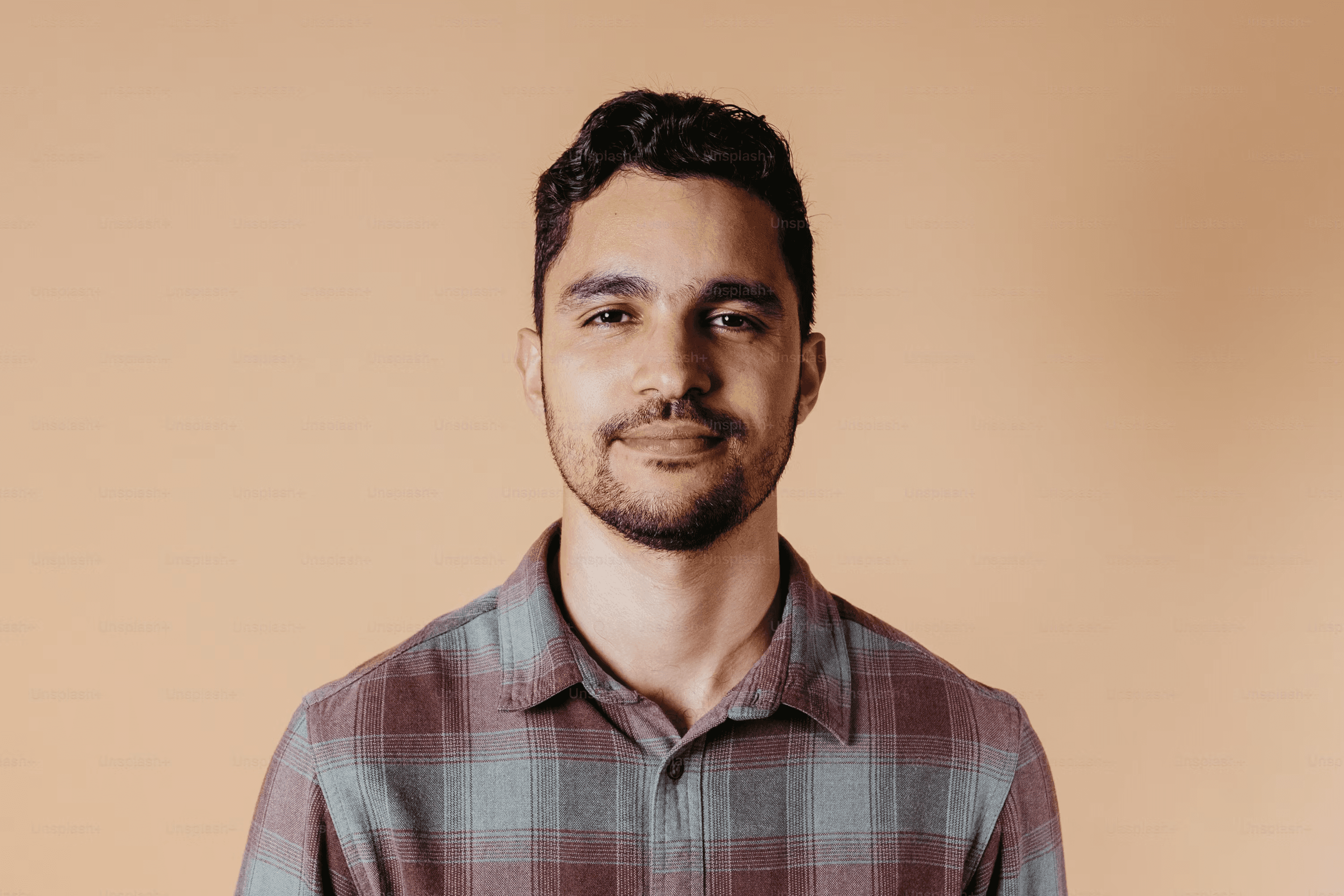
Marcus Rivera
AGE
GOALS
PAIN POINTS
BEHAVIORS
STORY
35
Project Manager
Austin, TX
Marcus frequently meets up with friends who live farther away. Because people are often traveling from different directions, he spends a lot of time trying to find places that feel fair for everyone.
Marcus prefers practical solutions and dislikes wasting time coordinating plans. If deciding takes too long, he often defaults to the same reliable spots just to avoid another complicated discussion.
Manually calculating halfway points
Unequal travel times
Too many messages before deciding
Switching between apps repeatedly
Plans stalling because nobody can choose
Frequently Uses - Google maps, text messaging, Google search, Yelp, calendar apps
Find fair meetup locations quickly
Reduce planning time
Balance travel effort between people
Make decisions faster
Avoid unnecessary texting and negotiation
Masters in Project Management
LOCATION
EDUCATION
JOB TITLE
“I just want to find somewhere that makes sense for everyone without spending so long figuring it out.”
Competitor Analysis
Features
MeetWays
Calculates an optimal midpoint
Recommends nearby venues
Real-time traffic
Group-decision making
Shared planning
Easy guided workflow
Supports multiple transportation modes
What’s Halfway
Google Maps
Results & Outcome
No competitor fully supports collaborative meetup planning, with users still relying on external messaging apps
Midpoint-focused tools prioritize simplicity over flexibility, offering quick calculations but limited personalization
Navigation platforms provide rich location data and real-time traffic, but lack dedicated features for finding fair meeting points or facilitating shared decision-making
Affinity Mapping
Raw Insights
Users rely on multiple apps & tools
Google Search & Maps act as a starting point
Multiple back and forth conversations
Decision making is collaborative but fragmented
It can be hard to make a decision with a large group
Informal voting for decisions
Travel time causes friction
Users want efficiency and quick decisions
Users often default to a familiar place
Key Findings
Planning is social but lacks a centralized space
Users rely on a fragmented workflow across multiple apps
Decision making is made by comparison
Users often feel the need for a speedy decision
Decisions need to be made by consensus and need to feel fair
04
Design
Wireframes
Low-fi designs

What worked?
Users commonly switch between:
Maps
Text messages
Social media
Calendar apps
What didn’t worked?
Users commonly switch between:
Maps
Text messages
Social media
Calendar apps
05
Branding
UI Kit & Components

06
Testing
Testing
Goal
I wanted to understand:
Can users understand how to create a meetup?
Can users find location recommendations?
Does the voting process feel intuitive?
Results
Key Findings
Participants understood that the app helps people find convenient meeting locations between two destinations, reducing the time spent coordinating through multiple apps
Users wanted more personalized recommendations
Participants wanted the ability to compare multiple meeting locations before making a decision
Several users looked for additional context, including estimated travel times for each person, parking availability, and nearby public transportation options
Design Improvements
Simplified the onboarding flow to better communicate the app's purpose
Expanded filtering options for budget, cuisine, activities, and atmosphere
Improved the map interface with clearer travel information and location details
Added comparison views to help users evaluate multiple destinations

07
Final Prototype
Introducing Halfway
✓ Find a fair meetup location
✓ Reduce planning conversations
✓ Make decisions together
✓ Spend more time connecting
Go to Prototype
08
Reflection
This project taught me that successful UX is not only about creating an intuitive interface, but understanding the emotional frustrations behind a problem. The biggest challenge was not helping users discover places — it was helping groups make decisions together.
Next Steps
Future improvements:
Calendar integration
Restaurant reservations
Personalized recommendations
Voting
Saved meetup groups
Real-time availability

UX CASE STUDY 2026

UX Design
UI Design
End-to-End
Mobile App
A location-based meetup app that helps friends find the perfect place to meet in the middle
Coordinating plans with friends often requires multiple conversations, searching across platforms, and negotiating locations. Halfway simplifies the planning process by helping users find convenient meetup spots based on everyone’s location and preferences
PROJECT TYPE
End-End Mobile App
DURATION
5 weeks
ROLE
Product Designer
TOOLS
Figma, Figjam, Maze
01
Overview
Project Brief
A mobile app designed to help friends, partners, family, and groups find convenient and meaningful places to meet based on their locations, preferences, and constraints. This app simplifies the often frustrating process of coordinating plans and deciding what to do when meeting up. The app recommends fair personalized meet up spots, activities, and venues
Target Audience
Socially active adults who frequently coordinate meetups with friends, family, or partners who live in different locations. Through early problem exploration and competitive research, I identified a need for a simpler way to find convenient meeting locations that fairly balance travel time between people.

Hypothesis
Planning meetups with friends often involves a frustrating back-and-forth process. Existing tools help users find places, but they do not solve the problem of choosing a location collaboratively
Goal
Business Goals:
Helping to solve a real-world, common coordination problem
Drive user engagement
Create opportunities for partnerships
User Goals:
Quickly find fair and convenient locations
Easily share, compare, and finalize meetup options within one platform

Solution
Design a mobile experience that reduces friction when planning social meetups by helping groups quickly discover a convenient meeting location
Project brief and overview
User Research
Competitor Analysis
User Personas
Affinity Mapping
Feature Set
Sitemapping
Wireframing
Low fidelity prototype
High fidelity prototype
Usability Testing
Iterations
Final Prototype
UI Kit
Discover
Define
Develop
Deliver
Design Process
*A look behind the scenes of my process. From initial research to the final prototype, I structured my workflow around the design process and real user insights.*
02
User Research
User Research
Goal
I wanted to understand:
How people currently plan meetups?
What causes friction during planning?
What tools users rely on?
What features would make meetup planning easier?
Methods
Survey: 8 participants
Interviews: 4 users
Competitive analysis
Finding 1
Planning requires too many tools.
Users commonly switch between:
Maps
Text messages
Social media
Calendar apps
Finding 2
Fairness matters.
Users want meetup locations that feel balanced rather than choosing a location based on one person’s convenience
Finding 3
Users value real connection.
Users want to spend less time planning and more time actually connecting.
Top Pain Points in Meetup Coordination
Deciding on a fair location
77%
Coordinating schedules
68%
Choosing venue type
59%
Getting consensus
54%
Figuring out navigation to location
62%
User Interviews
MA
Maeve, 26
Marketing Professional
“I spend more time deciding where to meet than actually meeting up with people.”
Long commute, endless group chats
JE
Jennifer, 52
Project Manager
“For client meetings, I need to find a neutral spot quickly and not waste time researching and Googling.”
Wasted planning time, professionalism
AW
Andrew, 30
Computer Engineer
“Plans always change last minute because someone complains about the distance.”
Changing plans, transportation limits
MA
Sam, 34
Restaurant Worker
“Trying to meet up with friends after work sometimes just stays in the group chat because we can't make a decision.”
Indecision, time spent deciding & debating
03
Analysis
User Personas

Olivia Chen
AGE
GOALS
PAIN POINTS
BEHAVIORS
STORY
26
Social Media Manager
Philadelphia, PA
Olivia meets up with friends, coworkers, and her partner several times a week. Most plans happen spontaneously through group chats, where conversations quickly become cluttered with screenshots, restaurant links, and “what about this place?” messages.
She enjoys discovering new spots and values the overall experience of going out, but she gets frustrated when simple plans turn into long decision threads.
Too much back-and-forth in group chats
Comparing multiple links and screenshots
Difficulty narrowing down options
Coordinating schedules and availability
Feeling overwhelmed by too many choices
Frequently Uses - Google maps, text messaging, Google search, Instagram/TikTok recommendation, calendar apps
Find places everyone feels excited about
Make planning feel easier
Discover new places without endless searching
Keep meetup planning collaborative and social
Avoid repeating the same places every weekend
Bachelor’s in Marketing and Business
LOCATION
EDUCATION
JOB TITLE
“It feels like we spend more time deciding where to go than actually hanging out.”
Marcus Rivera
AGE
GOALS
PAIN POINTS
BEHAVIORS
STORY
35
Project Manager
Austin, TX
Marcus frequently meets up with friends who live farther away. Because people are often traveling from different directions, he spends a lot of time trying to find places that feel fair for everyone.
Marcus prefers practical solutions and dislikes wasting time coordinating plans. If deciding takes too long, he often defaults to the same reliable spots just to avoid another complicated discussion.
Manually calculating halfway points
Unequal travel times
Too many messages before deciding
Switching between apps repeatedly
Plans stalling because nobody can choose
Frequently Uses - Google maps, text messaging, Google search, Yelp, calendar apps
Find fair meetup locations quickly
Reduce planning time
Balance travel effort between people
Make decisions faster
Avoid unnecessary texting and negotiation
Masters in Project Management
LOCATION
EDUCATION
JOB TITLE
“I just want to find somewhere that makes sense for everyone without spending so long figuring it out.”
Competitor Analysis
Features
MeetWays
Calculates an optimal midpoint
Recommends nearby venues
Real-time traffic
Group-decision making
Shared planning
Easy guided workflow
Supports multiple transportation modes
What’s Halfway
Google Maps
Results & Outcome
No competitor fully supports collaborative meetup planning, with users still relying on external messaging apps
Midpoint-focused tools prioritize simplicity over flexibility, offering quick calculations but limited personalization
Navigation platforms provide rich location data and real-time traffic, but lack dedicated features for finding fair meeting points or facilitating shared decision-making
Affinity Mapping
Raw Insights
Users rely on multiple apps & tools
Google Search & Maps act as a starting point
Multiple back and forth conversations
Decision making is collaborative but fragmented
It can be hard to make a decision with a large group
Informal voting for decisions
Travel time causes friction
Users want efficiency and quick decisions
Users often default to a familiar place
Key Findings
Planning is social but lacks a centralized space
Users rely on a fragmented workflow across multiple apps
Decision making is made by comparison
Users often feel the need for a speedy decision
Decisions need to be made by consensus and need to feel fair
User Journey
Creating a New Meetup
Sitemap

04
Design
Wireframes
Low-fi designs

What worked?
Users understood the overall purpose of the app
The flow felt straightforward, with users able to move through the steps from choosing a location to confirming the meetup
The map and venue screens gave users useful context when comparing potential meeting locations
What needed work?
Some users were unsure where to begin when creating a meetup and needed clearer guidance around the first step
Users wanted more context when viewing suggested locations
Some screens contained multiple actions and navigation options, making it less clear what the primary next step should be
05
Branding
Design System

06
Testing
Testing
Goal
I wanted to understand:
Can users understand how to create a meetup?
Can users find location recommendations?
Does the voting process feel intuitive?
Results
Key Findings
Participants understood that the app helps people find convenient meeting locations between two destinations, reducing the time spent coordinating through multiple apps
Users wanted more personalized recommendations
Participants wanted the ability to compare multiple meeting locations before making a decision
Several users looked for additional context, including estimated travel times for each person, parking availability, and nearby public transportation options
Design Improvements
Simplified the onboarding flow to better communicate the app's purpose
Expanded filtering options for budget, cuisine, activities, and atmosphere
Improved the map interface with clearer travel information and location details
Added comparison views to help users evaluate multiple destinations
07
Final Prototype
Introducing Halfway
✓ Find a fair meetup location
✓ Reduce planning conversations
✓ Make decisions together
✓ Spend more time connecting

Go to Prototype
08
Reflection
This project taught me that successful UX is not only about creating an intuitive interface, but understanding the emotional frustrations behind a problem. The biggest challenge was not helping users discover places — it was helping groups make decisions together.
Next Steps
Future improvements:
Calendar integration
Restaurant reservations
Personalized recommendations
Voting
Saved meetup groups
Real-time availability

OVERVIEW
RESEARCH
DESIGN
TESTING
FINAL PROTOTYPE
REFLECTION
01
Overview
Project Brief
A mobile app designed to help friends, partners, family, and groups find convenient and meaningful places to meet based on their locations, preferences, and constraints. This app simplifies the often frustrating process of coordinating plans and deciding what to do when meeting up. The app recommends fair personalized meet up spots, activities, and venues
Planning meetups with friends often involves a frustrating back-and-forth process. Existing tools help users find places, but they do not solve the problem of choosing a location collaboratively
Problem
Design a mobile experience that reduces friction when planning social meetups by helping groups quickly discover a convenient meeting location
Solution
Business Goals:
Helping to solve a real-world, common coordination problem
Drive user engagement
Create opportunities for partnerships
User Goals:
Quickly find fair and convenient locations
Easily share, compare, and finalize meetup options within one platform
Goal
Target Audience
Socially active adults who frequently coordinate meetups with friends, family, or partners
Design Process
Project brief and overview
User Research
Competitor Analysis
User Personas
Affinity Mapping
Feature Set
Sitemapping
Wireframing
Low fidelity prototype
High fidelity prototype
Usability Testing
Iterations
Final Prototype
UI Kit
Discover
Define
Develop
Deliver
*A look behind the scenes of my process. From initial research to the final prototype, I structured my workflow around the design process and real user insights.*
02
User Research
User Research
Goal
I wanted to understand:
How people currently plan meetups?
What causes friction during planning?
What tools users rely on?
What features would make meetup planning easier?
Methods
Survey: X participants
Interviews: X users
Competitive analysis
User testing
Finding 1
Planning requires too many tools.
Users commonly switch between:
Maps
Text messages
Social media
Calendar apps
Finding 2
Fairness matters.
Users want meetup locations that feel balanced rather than choosing a location based on one person’s convenience
Finding 3
Users value real connection.
Users want to spend less time planning and more time actually connecting.
Top Pain Points in Meetup Coordination
Deciding on a fair location
77%
Coordinating schedules
68%
Choosing venue type
59%
Getting consensus
54%
Figuring out navigation to location
62%
User Interviews
MA
Maeve, 26
Marketing Professional
“I spend more time deciding where to meet than actually meeting up with people.”
Long commute, endless group chats
AW
Andrew, 28
Computer Science Engineer
“Plans always change last minute because someone complains about the distance.”
Changing plans, transportation limits
MA
Jennifer, 52
Project Manager
“For client meetings, I need to find a neutral spot quickly and not waste time researching and Googling.”
Wasted planning time, professionalism
MA
Sam, 34
Restaurant Worker
“Trying to meet up with friends after work sometimes just stays in the group chat because we can’t decide”
Indecision, time spent deciding & debating
03
Analysis
User Personas
Olivia Chen
AGE
GOALS
PAIN POINTS
BEHAVIORS
STORY
26
Social Media Manager
Philadelphia, PA
Olivia meets up with friends, coworkers, and her partner several times a week. Most plans happen spontaneously through group chats, where conversations quickly become cluttered with screenshots, restaurant links, and “what about this place?” messages.
She enjoys discovering new spots and values the overall experience of going out, but she gets frustrated when simple plans turn into long decision threads.
Too much back-and-forth in group chats
Comparing multiple links and screenshots
Difficulty narrowing down options
Coordinating schedules and availability
Feeling overwhelmed by too many choices
Frequently Uses - Google maps, text messaging, Google search, Instagram/TikTok recommendation, calendar apps
Find places everyone feels excited about
Make planning feel easier
Discover new places without endless searching
Keep meetup planning collaborative and social
Avoid repeating the same places every weekend
Bachelor’s in Marketing and Business
LOCATION
EDUCATION
JOB TITLE
“It feels like we spend more time deciding where to go than actually hanging out.”
Marcus Rivera
AGE
GOALS
PAIN POINTS
BEHAVIORS
STORY
35
Project Manager
Austin, TX
Marcus frequently meets up with friends who live farther away. Because people are often traveling from different directions, he spends a lot of time trying to find places that feel fair for everyone.
Marcus prefers practical solutions and dislikes wasting time coordinating plans. If deciding takes too long, he often defaults to the same reliable spots just to avoid another complicated discussion.
Manually calculating halfway points
Unequal travel times
Too many messages before deciding
Switching between apps repeatedly
Plans stalling because nobody can choose
Frequently Uses - Google maps, text messaging, Google search, Yelp, calendar apps
Find fair meetup locations quickly
Reduce planning time
Balance travel effort between people
Make decisions faster
Avoid unnecessary texting and negotiation
Masters in Project Management
LOCATION
EDUCATION
JOB TITLE
“I just want to find somewhere that makes sense for everyone without spending so long figuring it out.”
Competitor Analysis
Features
MeetWays
Calculates an optimal midpoint
Recommends nearby venues
Real-time traffic
Group-decision making
Shared planning
Easy guided workflow
Supports multiple transportation modes
What’s Halfway
Google Maps
Results & Outcome
No competitor fully supports collaborative meetup planning, with users still relying on external messaging apps
Midpoint-focused tools prioritize simplicity over flexibility, offering quick calculations but limited personalization
Navigation platforms provide rich location data and real-time traffic, but lack dedicated features for finding fair meeting points or facilitating shared decision-making
Affinity Mapping
Raw Insights
Users rely on multiple apps & tools
Google Search & Maps act as a starting point
Multiple back and forth conversations
Decision making is collaborative but fragmented
It can be hard to make a decision with a large group
Informal voting for decisions
Travel time causes friction
Users want efficiency and quick decisions
Users often default to a familiar place
Key Findings
Planning is social but lacks a centralized space
Users rely on a fragmented workflow across multiple apps
Decision making is made by comparison
Users often feel the need for a speedy decision
Decisions need to be made by consensus and need to feel fair
Affinity Mapping
Raw Insights
Users rely on multiple apps & tools
Google Search & Maps act as a starting point
Multiple back and forth conversations
Decision making is collaborative but fragmented
It can be hard to make a decision with a large group
Informal voting for decisions
Travel time causes friction
Users want efficiency and quick decisions
Users often default to a familiar place
Key Findings
Planning is social but lacks a centralized space
Users rely on a fragmented workflow across multiple apps
Decision making is made by comparison
Users often feel the need for a speedy decision
Decisions need to be made by consensus and need to feel fair
04
Design
Wireframes
Low-fi designs
What worked?
Users commonly switch between:
Maps
Text messages
Social media
Calendar apps
What didn’t worked?
Users commonly switch between:
Maps
Text messages
Social media
Calendar apps
05
Branding


UI Kit & Components
06
Testing
Testing
Goal
I wanted to understand:
Can users understand how to create a meetup?
Can users find location recommendations?
Does the voting process feel intuitive?
Results
Key Findings
Participants understood that the app helps people find convenient meeting locations between two destinations, reducing the time spent coordinating through multiple apps
Users wanted more personalized recommendations
Participants wanted the ability to compare multiple meeting locations before making a decision
Several users looked for additional context, including estimated travel times for each person, parking availability, and nearby public transportation options
Design Improvements
Simplified the onboarding flow to better communicate the app's purpose
Expanded filtering options for budget, cuisine, activities, and atmosphere
Improved the map interface with clearer travel information and location details
Added comparison views to help users evaluate multiple destinations
07
Final Prototype
Introducing Halfway
✓ Find a fair meetup location
✓ Reduce planning conversations
✓ Make decisions together
✓ Spend more time connecting
Go to Prototype
08
Reflection
This project taught me that successful UX is not only about creating an intuitive interface, but understanding the emotional frustrations behind a problem. The biggest challenge was not helping users discover places — it was helping groups make decisions together.
Next Steps
Future improvements:
Calendar integration
Restaurant reservations
Personalized recommendations
Voting
Saved meetup groups
Real-time availability
Let's Work
Together.
Let’s Work
Together.
Have a project in mind or just want to say hello?
I'd love to hear from you.
Have a project in mind or just want to say hello?
I’d love to hear from you.
katiewmcdonnell@gmail.com
